
Varicose Vein Treatment: 4 Safe & Non-Surgical Options
If you’re searching for "varicose vein treatment,” you want effective, minimally invasive care that treats both symptoms and appearance. At Versailles we offer a full spectrum of vein treatment options, Radiofrequency & Laser Ablation, Phlebectomy & Sclerotherapy, and Varithena injections, to address varicose veins, spider veins on legs, and the discomfort they can cause.
This guide explains how each treatment works, what to expect, and answers common questions including Varicose veins treatment cost and how to find the right Spider vein treatment near me.
Understanding the problem: varicose veins vs spider veins
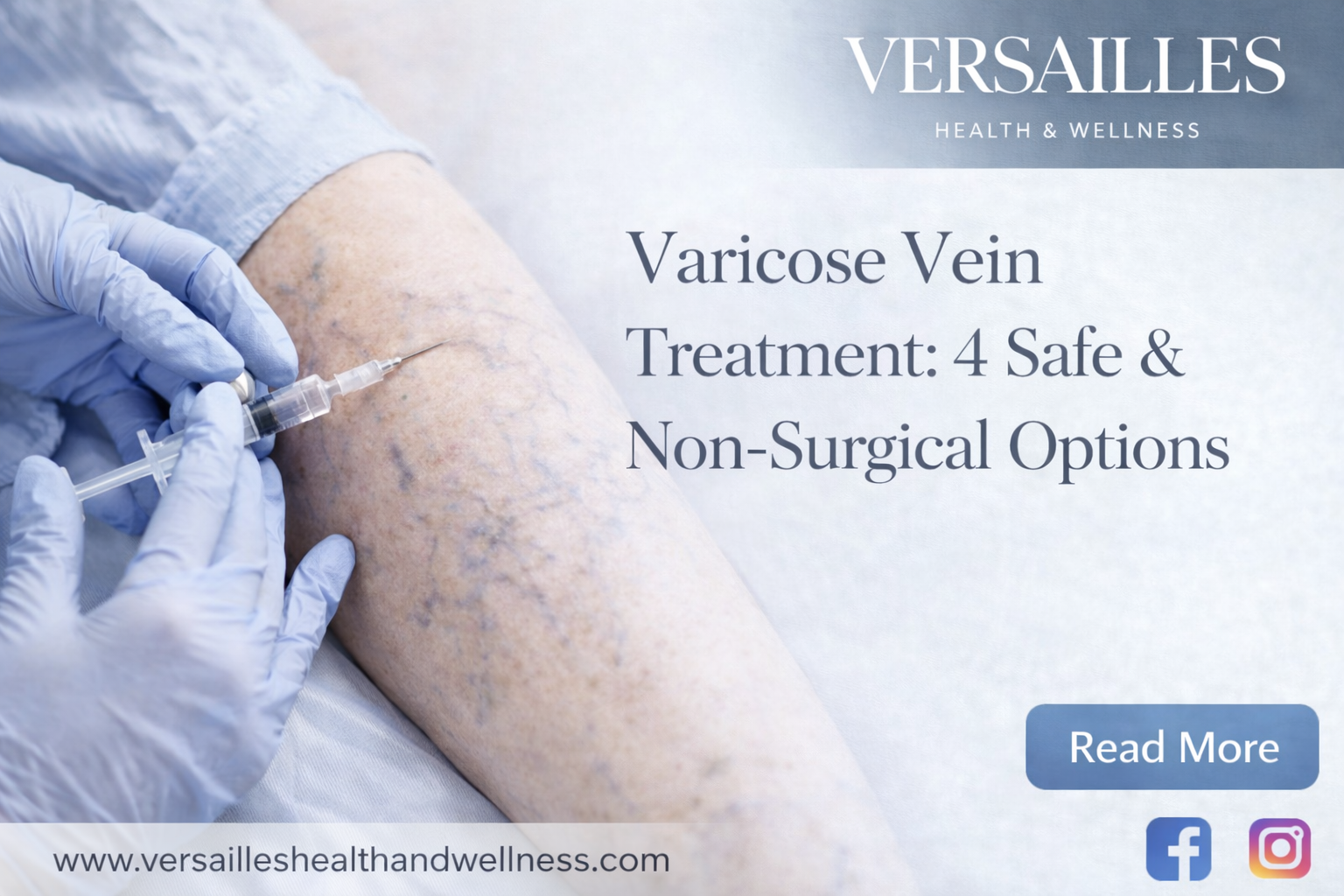
Varicose veins are enlarged, bulging veins that often occur in the legs due to venous reflux (faulty valves). They may cause aching, swelling, cramping, restless legs, or skin changes. Spider veins on legs are smaller, more superficial vessels that create a web-like appearance and are often a cosmetic concern but can also cause discomfort.
If you’re looking for spider veins on leg treatment or solutions for larger varicose veins, proper diagnosis with duplex ultrasound is the first step.
How we diagnose and choose the best treatment
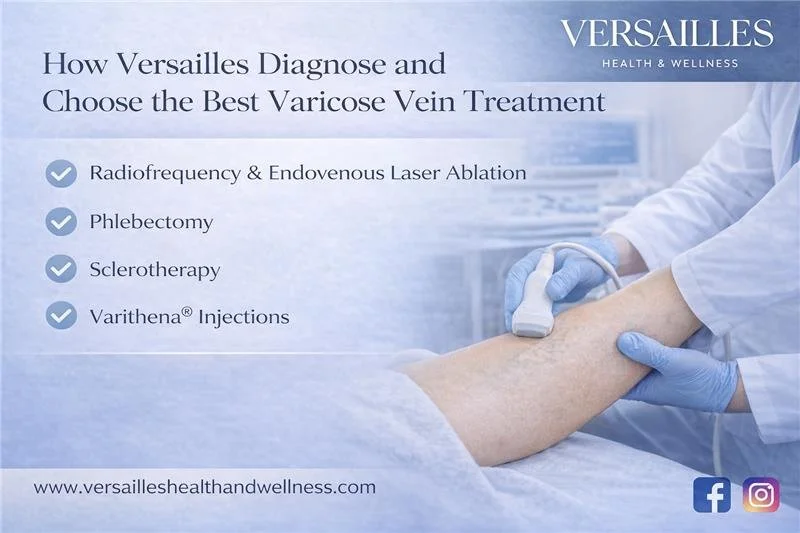
Before any procedure, we perform a clinical exam and duplex ultrasound mapping to identify the underlying reflux and map the veins causing your symptoms.
Accurate mapping allows us to recommend the best non-surgical vein treatment for your specific anatomy, whether that’s Radiofrequency & Laser Ablation to treat the source of reflux, phlebectomy to remove bulging surface veins, sclerotherapy for spider veins, or Varithena® injections when veins are tortuous and not easily accessed with a catheter.
Radiofrequency & Endovenous Laser Ablation (RFA / EVLT)
Radiofrequency and laser ablation are catheter-based thermal procedures used to close refluxing saphenous veins (the common source of varicose veins). Under local anesthesia and ultrasound guidance, a small catheter delivers heat to collapse and seal the faulty vein; blood is then rerouted through healthy veins.
These treatments are leading non-surgical vein treatment choices because they are performed in-office, require minimal downtime, and have high success rates. Many patients resume light activity the same day.
Phlebectomy (Ambulatory Microphlebectomy)
Phlebectomy removes visible, bulging varicose veins through tiny incisions under local anesthesia. This procedure provides immediate cosmetic improvement and symptom relief for veins that are too large for sclerotherapy.
Phlebectomy is often combined with RFA or EVLT to treat both the underlying reflux and the surface varicosities for durable results.
Sclerotherapy (Liquid and Foam)
Sclerotherapy is the preferred option for spider veins on legs and small reticular veins. A sclerosant is injected into the vein, causing it to collapse and be reabsorbed. Liquid sclerotherapy treats fine spider veins; foam sclerotherapy is used for larger tributaries.
Multiple sessions may be required for optimal cosmetic results. If you are searching for spider vein treatment near me, sclerotherapy is the common, minimally invasive solution.
Varithena® Injections
Varithena® is an FDA-approved polidocanol foam specifically formulated to treat incompetent great saphenous veins and branching varicosities, especially when veins are tortuous. It’s an excellent option when catheter-based access is challenging and can reduce bulging and symptoms with a single in-office treatment in many cases.
Varithena® expands the non-surgical toolkit and gives us greater flexibility when tailoring treatment.
Combining treatments for best outcomes
The most successful vein care treats the root cause first. We typically address the underlying reflux (RFA/EVLT or Varithena®) and then treat the remaining surface veins and spider veins with phlebectomy and sclerotherapy.
This staged approach minimizes recurrence and enhances both functional and cosmetic results. Discussing Vein treatment options with your vein specialist ensures a customized plan based on your goals and medical needs.
Recovery and aftercare
After non-surgical vein treatment, most patients walk immediately and can return to normal activities within days. Compression stockings are commonly recommended for 1–2 weeks to support healing and reduce bruising.
Mild soreness, bruising, and temporary numbness near treated veins are common and usually resolve in a few weeks. Follow-up visits and ultrasound checks confirm treatment success.
Varicose veins treatment cost: what to expect
Varicose veins treatment cost varies depending on procedure type, disease extent, number of treatment sessions, and whether insurance coverage applies.
Insurance often covers ablation and phlebectomy when there is documented medical necessity (symptoms and duplex evidence of reflux).
Cosmetic-only spider vein treatments are more likely to be out-of-pocket. Typical pricing ranges:
RFA/EVLT: varies by complexity and number of veins treated.
Phlebectomy: depends on the number of veins removed.
Sclerotherapy: often billed per session.
Varithena®: cost varies with treated area and number of injections.
For a precise estimate, schedule a consultation so we can evaluate your veins and provide a personalized quote and insurance assistance.
Ready to take the next step?
If you’re searching for "varicose vein treatment near me” or need spider veins on leg treatment, we’re here to help with comprehensive, minimally invasive care.
Schedule a consultation and duplex ultrasound to determine the best non-surgical vein treatment plan tailored to you.
Whether your concern is cosmetic (Spider veins on legs) or medical (painful varicose veins), our team delivers personalized, evidence-based care.
Call or email today to learn more about Vein treatment options and get a clear estimate for Varicose veins treatment cost. We look forward to helping you feel and look better.
FAQ’s
Q: Do spider veins mean I need surgery?
A: No, most spider veins are treated non-surgically with sclerotherapy. If you have symptoms or underlying reflux, non-surgical ablation or Varithena® may be recommended first.Q: Will my veins come back?
A: Treating the source of reflux reduces recurrence risk. Some new veins can appear over time, but staged treatments minimize this.Q: How do I find reliable ‘Spider vein treatment near me’?
A: Look for clinics offering duplex ultrasound, multiple Vein treatment options, and experienced specialists with before/after photos and good patient reviews.Q: What is recovery like after vein treatments?
A: Most patients walk the same day, wear compression stockings 1–2 weeks, and expect mild bruising or soreness for days–weeks. For specific aftercare related to varicose vein treatment near me or spider veins on leg treatment, book a consultation.
Q: Are vein treatments safe and what are the risks?
A: These non-surgical vein treatment options are generally safe. Common effects: bruising, temporary numbness, or skin discoloration. Rare risks: infection, blood clots, or allergic reaction. Ask about Varicose veins treatment cost and individualized risks at your Spider vein treatment near me appointment
