
Botox and Fillers: What You Need to Know Before Your Treatment
Cosmetic injectables have become a cornerstone of modern aesthetic care, offering quick, minimally invasive ways to refresh your appearance.
Whether you’re searching for “botox treatment near me” or comparing “botox vs fillers cost,” understanding how Botox and dermal fillers work, where they’re used, and what results to expect will help you choose the right treatment for your goals.
What are Botox and Fillers?
Botox is a neuromodulator derived from botulinum toxin that temporarily relaxes targeted muscles.
It softens dynamic lines caused by facial movement, think frown lines, forehead creases, and crow’s feet. Dermal fillers, by contrast, are injectable gels (commonly hyaluronic acid) that restore volume, lift, and contour by physically filling areas of hollowness or loss.
These two categories serve different purposes and are often used together for balanced, natural-looking rejuvenation.
Botox treatment areas
Botox (relaxes muscles, best for movement-related lines)

Forehead: softens horizontal creases caused by raising the brows, giving a smoother brow while preserving natural movement when dosed conservatively.
Glabella (frown lines): reduces the vertical “11” lines between the brows for a less tired or angry appearance.
Crow’s feet: softens the fine lines at the outer corners of the eyes that appear with smiling and squinting.
Brow lift: strategic weakening of depressors can create a subtle lateral brow elevation to open the eyes.
Masseter (jaw): relaxes the chewing muscle to reduce teeth grinding and slim a square jaw over weeks.
Chin dimpling: smooths a “pebbled” chin appearance caused by hyperactive mentalis muscle.
Neck bands (platysma): softens vertical neck cords and can improve lower-face contour.
Hyperhidrosis: injections block nerve signals to sweat glands, markedly reducing excessive sweating for months.
Fillers: treatment areas
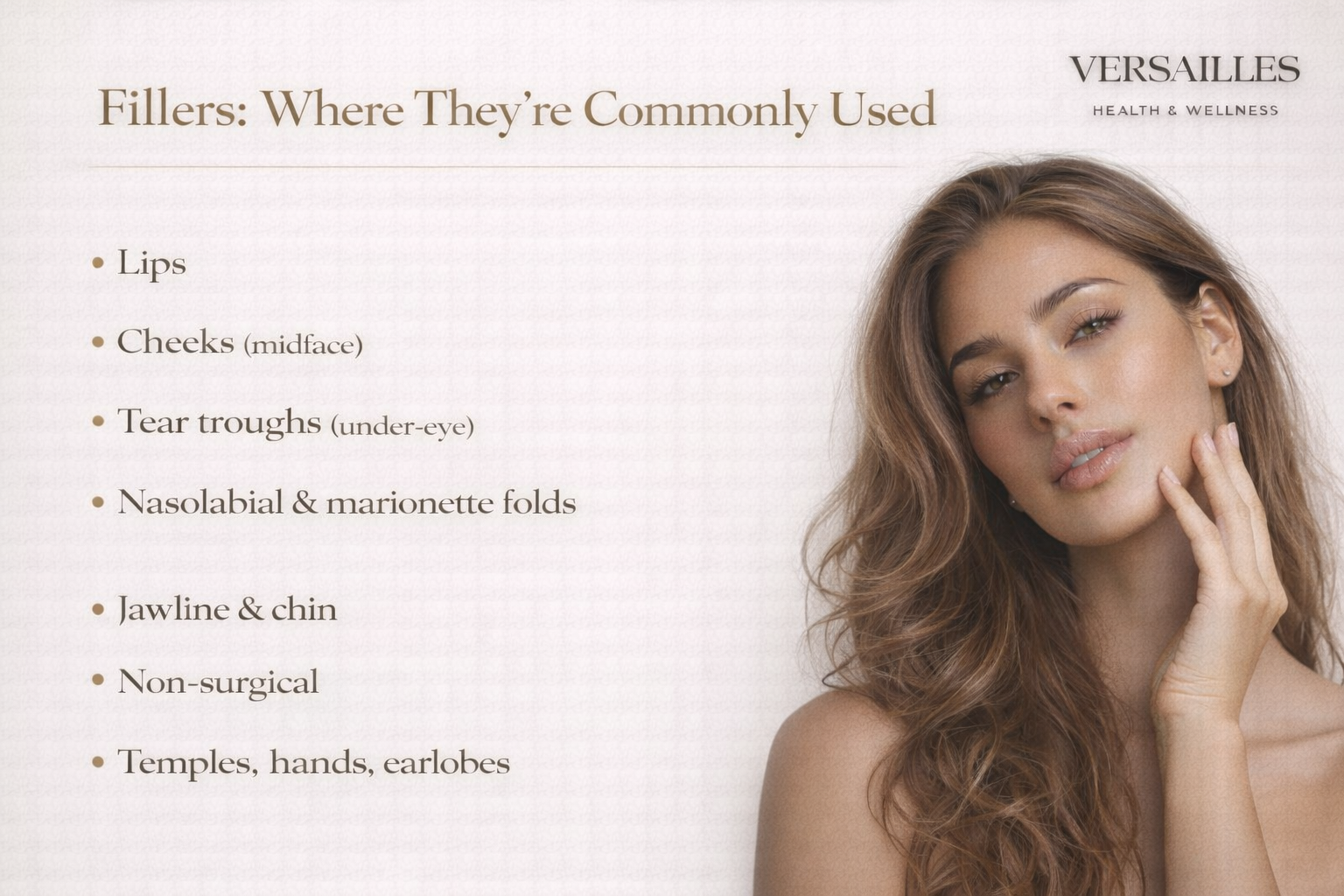
Lips: add volume, shape the vermillion border, and correct asymmetry for fuller, natural-looking lips.
Cheeks (midface): restore lost volume and lift the midface, improving nasolabial folds and overall facial harmony.
Tear troughs (under-eye): fill hollowing to reduce shadowing and tired appearance, requires delicate technique to avoid puffiness.
Nasolabial & marionette folds: refill deep smile and mouth-to-chin lines to smooth transitions and restore support.
Jawline & chin: contour and project the lower face for a sharper profile and better facial balance.
Non-surgical rhinoplasty: smooth bumps or lift a drooping tip for immediate refinement without surgery (technique-sensitive).
Temples, hands, earlobes: replenish age-related hollows for a subtle, rejuvenated look in peripheral areas.
Difference between Botox and fillers, explained
If you’ve typed “what is the difference between botox and fillers” or “is botox the same as fillers,” the simplest answer is: no, they are not the same.
Botox relaxes muscles to reduce movement-related lines. Fillers add volume to areas that have thinned with age or need structural support. Each has its own indications, expected results, longevity, and potential side effects.
They can be complementary; using both strategically often yields the most harmonious outcomes.
Longevity and results
Botox results typically start to appear within a few days and reach full effect in about two weeks; results usually last 3–4 months.
Fillers can last from 6 months to 2 years or more depending on the product, area treated, and individual metabolism. Both treatments are reversible or adjustable in many cases, hyaluronic acid fillers can be dissolved with hyaluronidase, while Botox effects wear off over time.
Safety and experience
Both Botox and fillers are widely used and generally safe when administered by experienced, licensed practitioners.
Side effects may include temporary bruising, swelling, or redness at the injection site. Rare but important risks (e.g., vascular occlusion with fillers) underscore the importance of choosing a qualified provider.
Before any treatment, discuss medical history, medications, allergies, and aesthetic goals during your consultation.
Cost considerations: botox vs fillers cost
When comparing “botox vs fillers cost,” remember they are priced differently: Botox is typically charged per unit and depends on the number of units used, while fillers are usually charged per syringe.
Cost varies by practitioner, geographic location, and the specific product chosen. A consultation will provide an accurate estimate tailored to your needs.
Searching “best botox and fillers near me” or “botox treatment near me” and comparing credentials, reviews, and before-and-after portfolios can help you find good value and safety.
Finding a provider and realistic expectations
Look for board-certified dermatologists, plastic surgeons, or licensed injectors with extensive, verifiable experience.
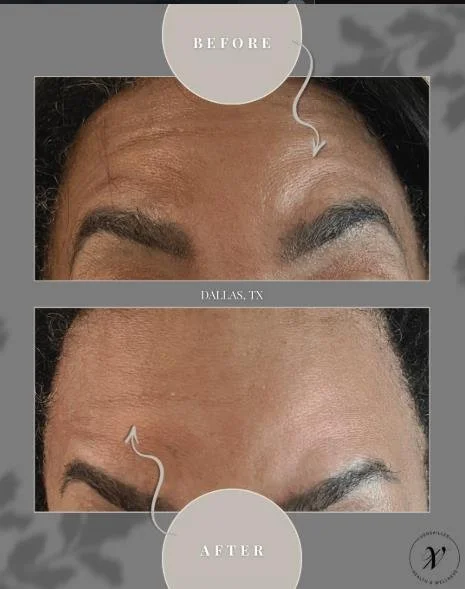
Review “botox fillers before and after pictures” to evaluate naturalness and consistency of results, but be cautious of edited images or inconsistent lighting.
A reputable practitioner will offer a candid assessment of what’s achievable and tailor a plan that suits your facial anatomy and aesthetic goals.
Combining treatments
Many patients choose combination approaches, Botox to reduce dynamic movement and fillers to restore volume and contour.
This synergistic strategy often delivers more balanced, long-lasting outcomes than either treatment alone. Your provider will recommend timing and sequencing based on the areas treated and your individual response.
Aftercare and follow-up
Aftercare advice is straightforward: avoid strenuous exercise, significant heat exposure, and massaging treated areas for a short period after injections.
Follow-up appointments allow fine-tuning and address any concerns. Always contact your provider if you experience unusual pain, prolonged swelling, or signs of infection.
Conclusion
Botox and fillers are powerful tools for facial rejuvenation when used appropriately. Start with a thorough consultation, set realistic expectations, and choose a provider who prioritizes safety and natural-looking results.
If you’re searching “botox treatment near me” or “best botox and fillers near me,” take the time to review credentials and before-and-after images to ensure you’re comfortable with your choice.
FAQs
Q: Are Botox and fillers the same?
A: No. Botox is a neuromodulator that relaxes muscles; fillers add volume and structure. They serve different purposes but are often used together.
Q: What’s the difference between Botox and fillers?
A: Botox treats dynamic lines by reducing muscle activity. Fillers restore volume, fill hollows, and enhance contours. Duration, technique, and outcomes differ.
Q: Where can Botox be used?
A: Common botox treatment areas include the glabella (frown lines), forehead, crow’s feet, chin, neck bands, and other small muscle-related lines.
Q: Can I get botox and lip fillers together?
A: Yes. Many patients combine Botox with lip fillers to smooth vertical lip lines and add fullness. Your injector will plan timing for optimal results.
Q: How much will it cost?
A: Costs vary by provider, product, and location. Botox is usually priced per unit; fillers per syringe. Get a consult for a personalized estimate.
Q: How can I find the best provider?
A: Search for licensed, experienced injectors with strong reviews and clear “botox fillers before and after pictures.” Prioritize credentials and patient safety over price.
Q: Where can I see results?
A: Many clinics share before-and-after photos on websites and social media. Look for consistent, unedited examples and reviews.