
Hormones & Weight Gain: The Hidden Link Explained
You eat well. You keep moving. And yet the scale just won't move or, worse, keeps creeping up. Before you blame your willpower, look at something deeper. Your hormones.
One of the most frustrating things a person can go through is gaining weight, especially when it seems to happen in spite of honest effort. The old story – eat less, move more – is strictly true, but dangerously incomplete. What it does not include is the invisible orchestra of chemical messengers that run quietly in the background: hormones. These little guys control everything from hunger levels to fat storage in the body, and when they’re out of whack, it can feel like an uphill battle even for the healthiest lifestyle. It’s not an excuse, it’s about understanding the hormonal side of weight gain. It’s about getting to the real answer.

What do hormones have to do with weight?
Glands all over your body produce hormones – thyroid, adrenal glands, pancreas, ovaries, testes and more. They go around the bloodstream telling the organs and tissues what to do. Several hormones are particularly powerful when it comes to body weight loss clinic Rockwall TX. Think of these hormones as traffic controllers. When they’re all working together, the system functions like a finely tuned machine: You get hungry when your body actually needs fuel, content when you’ve eaten enough, and your metabolism hums along at a healthy pace. But if one signal goes awry, the whole network can come to a halt.
The trouble comes when insulin levels are chronically high. This occurs with diets high in refined carbohydrates and sugar, leading to repeated blood sugar spikes. Eventually, cells may become resistant to the signal of insulin, so the pancreas produces even more. This condition – insulin resistance – is a primary cause of both Type 2 diabetes and unexplained weight gain, especially in the midsection.
The answer isn’t necessarily to eat less. It’s to eat smarter. Cutting back on refined sugars, eating more fibre, and having balanced meals that don’t cause a big spike in blood sugar can help you regain insulin sensitivity over time.
Cortisol: When Stress Turns to Fat
The body's main stress hormone is cortisol, which is released from the adrenal glands when the body senses danger. It’s very useful for short bursts – it focuses you, gives you a burst of energy, and gets you ready to go. The problem is that modern life keeps the stress response on far too often.
Chronically high cortisol tells your body to conserve energy stores, a survival mechanism from the days when stress meant real physical danger and food was less available. It encourages fat storage in the visceral area (your organs and midsection), increases appetite, and causes cravings for calorie-dense, high-fat, high-sugar foods. Research has repeatedly found that high levels of cortisol are associated with a high body mass index.
Stress management isn’t a luxury – for many people with weight problems, it’s a medical necessity. Enough sleep, mindfulness, regular movement, and social connection all help to bring cortisol back down to manageable levels.
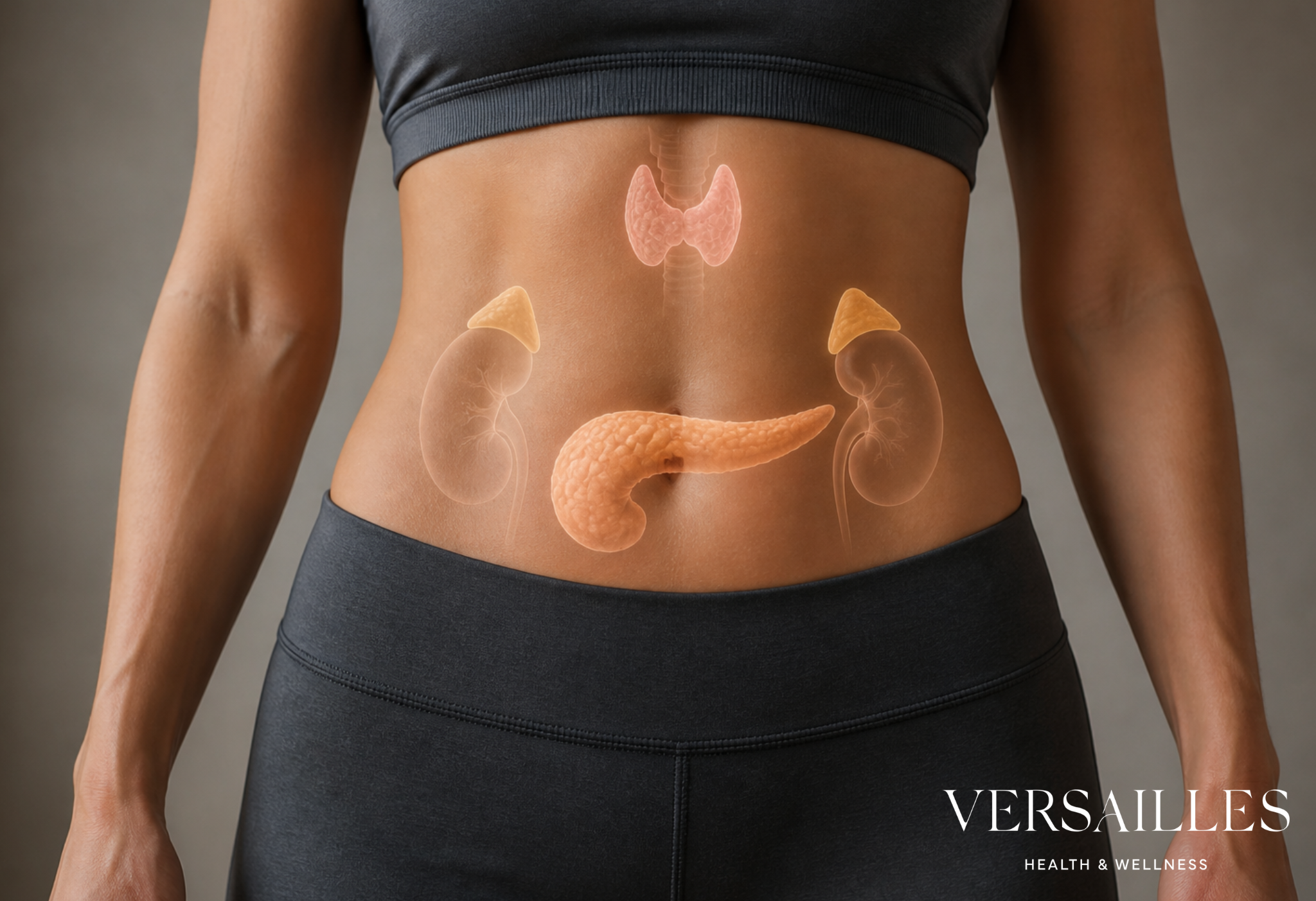
The thyroid gland: Your metabolic thermostat
The thyroid gland is a small butterfly-shaped gland in your neck that produces hormones (T3 and T4) that control the rate at which your body burns energy. With a healthy thyroid, your metabolism functions properly. A sluggish thyroid, called hypothyroidism, puts the brakes on everything.
Hypothyroidism causes people to gain weight unexpectedly, feel constantly tired, cold, lose hair, and generally feel unenergetic in a way that no amount of sleep fixes. That’s because when thyroid hormone production declines, the body’s baseline calorie-burning rate drops, making weight gain nearly inevitable without intervention.
Hypothyroidism is much more common than most people think, affecting an estimated 1 in 20 people to varying degrees, and it is much more common in women. It can be diagnosed with a simple blood test and is usually treated very successfully with thyroid hormone replacement therapy.
Leptin and ghrelin: the hunger twins
Leptin is your satiety signal, produced by fat cells to tell your brain when you’ve had enough. Ghrelin, meanwhile, is produced in the stomach and triggers hunger. Ideally, the two work in concert, with ghrelin rising before a meal to stimulate eating and leptin rising after to signal satiety.
Connect sex hormones with weight
Oestrogen, progesterone, and testosterone also have a strong influence on body composition. In women, hormonal changes during perimenopause and menopause, especially a drop in oestrogen, are often linked to increased fat storage around the waist, regardless of diet and exercise routine. As men get older, their testosterone levels go down. This may cause them to lose muscle mass and store more fat.
These changes don’t mean you’ll gain weight as you age, but they do mean you may need to change the way you approach it. It is especially important to build and maintain muscle mass, which is metabolically active and can help counteract the slowdown that hormonal changes can cause.

The big picture
Weight isn’t just a matter of calories in versus calories out – it never really was. Hormones are the intersection of metabolism, appetite, stress, sleep, and ageing, and when they are out of sync, even the most disciplined effort can produce disappointing results. The good news is that hormonal health is responsive to the same fundamentals that support overall wellbeing: quality sleep, nourishing food, movement, stress management, and professional guidance when something deeper is going on.
If you’re struggling with your weight and feel like you’re doing everything right, maybe it’s time to look not just at what you’re eating — but at what your hormones are telling your body to do with it.